Monday - Friday 07:30 - 17:30, Saturday 07:30 - 16:00
Floor Sanding in Langley
Back to Portfolio
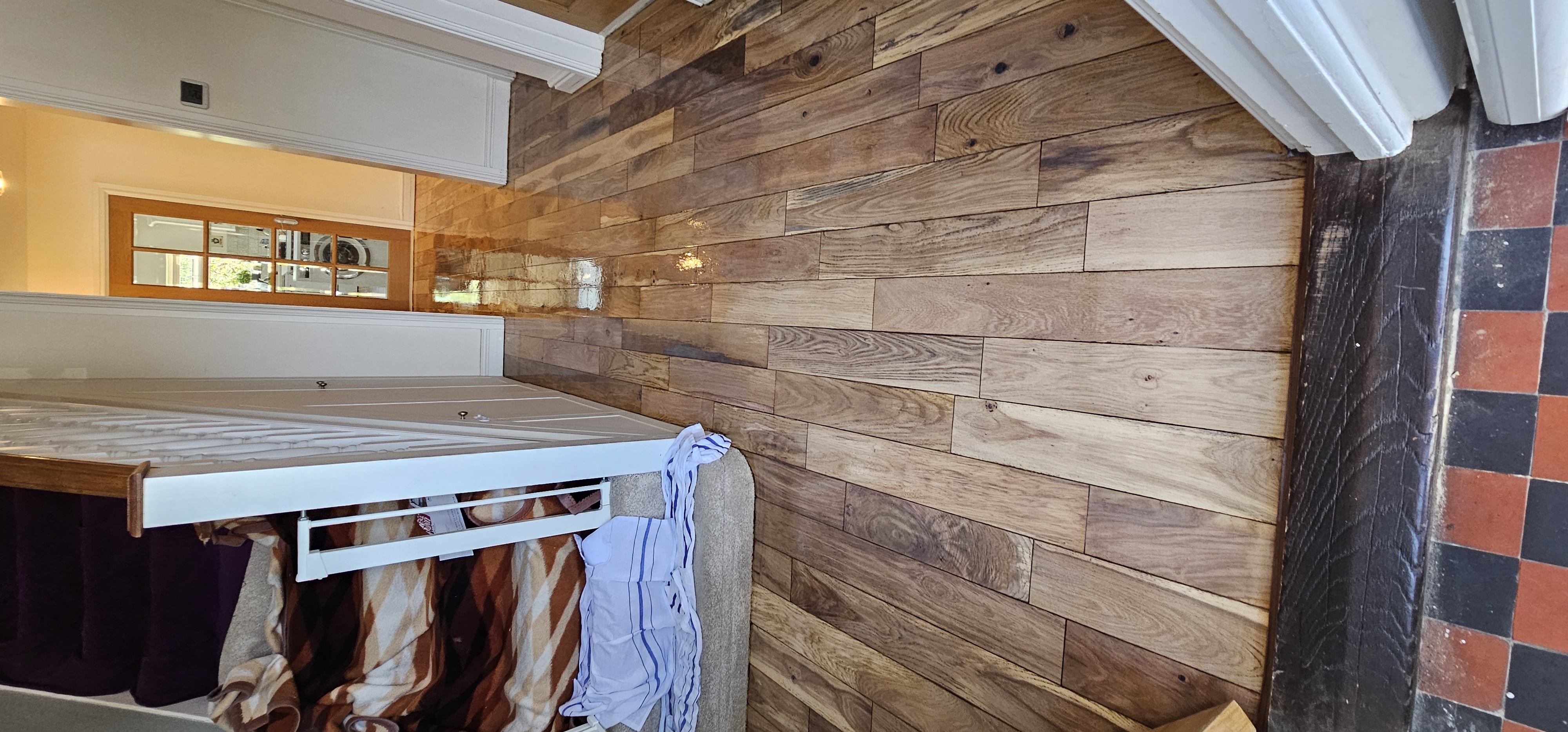
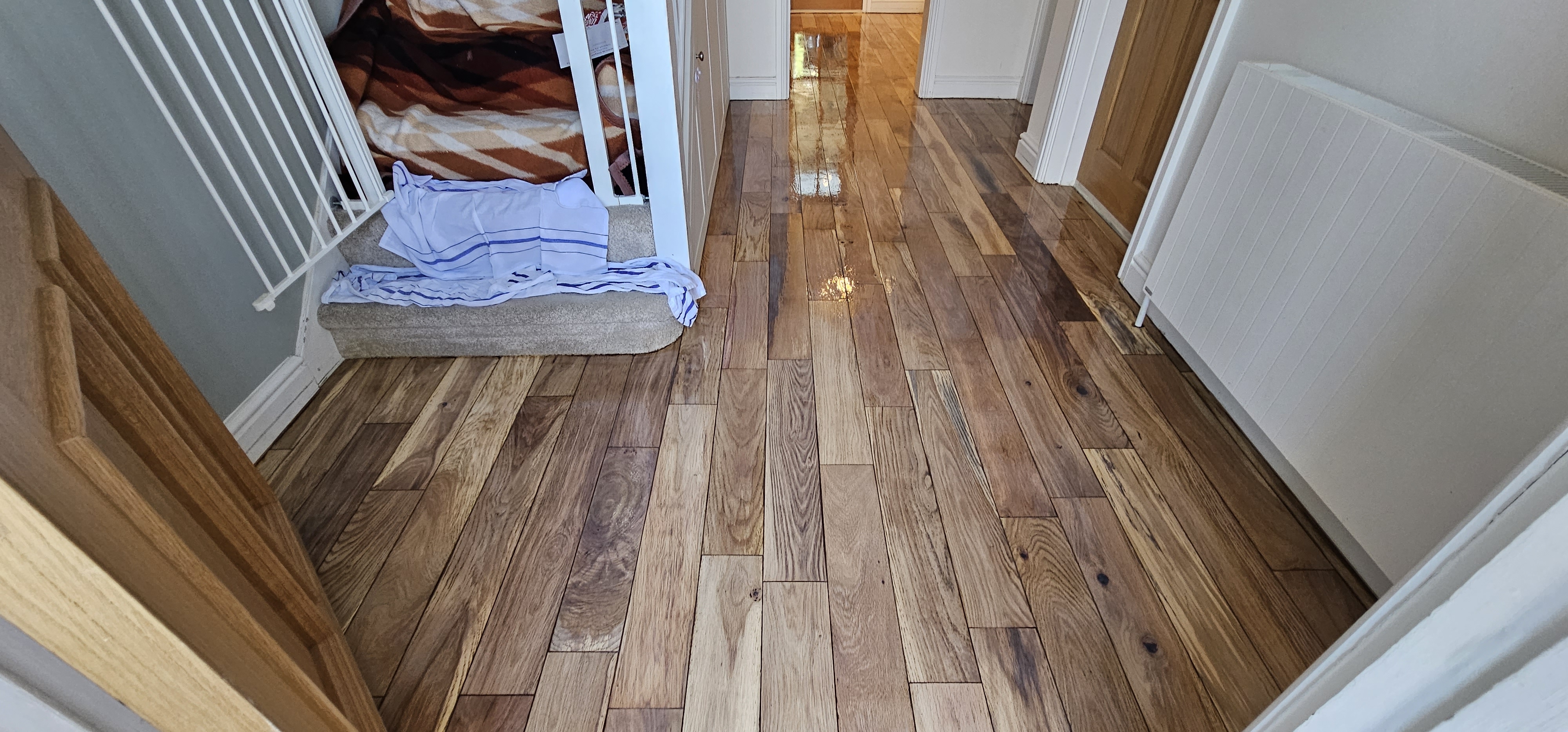
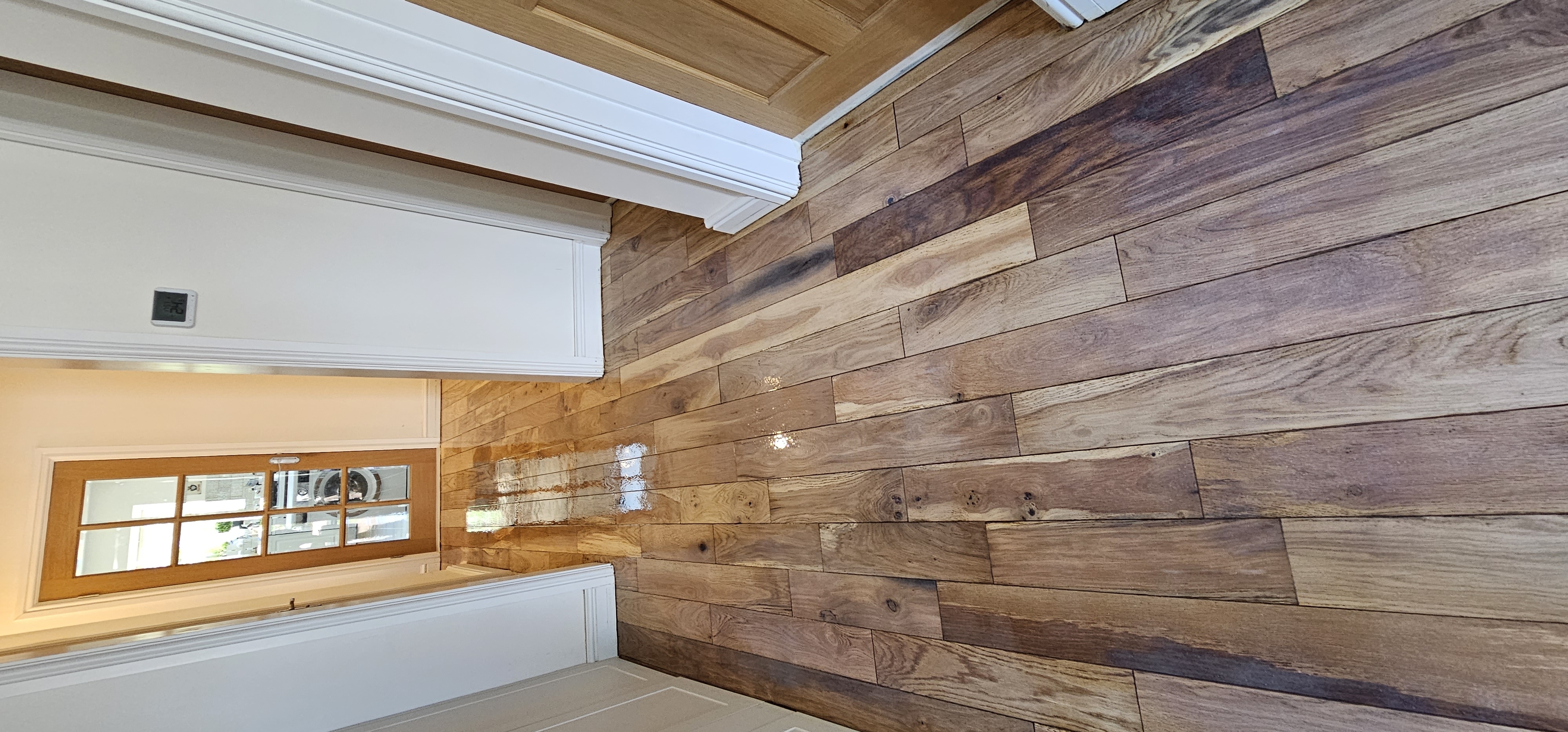
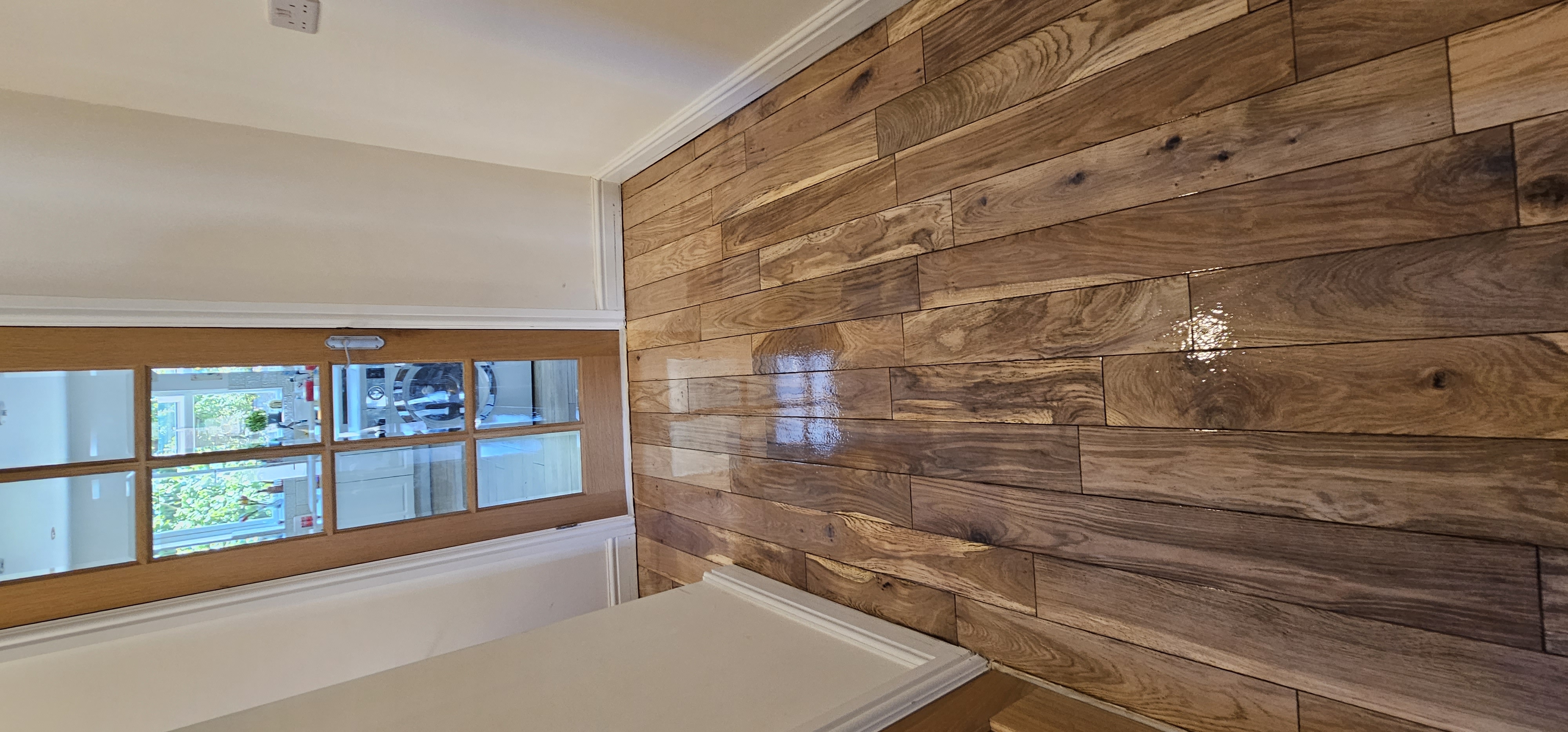
Floor Sanding in Langley
We recently completed a comprehensive floor sanding project on a Victorian terraced property in Langley. The original pine floorboards had accumulated decades of wear, scratches, and marks from previous finishes. Our team restored them to their natural beauty using specialist sanding equipment and multiple grits to achieve a smooth, even surface ready for sealing.
Work carried out
- Three stage sanding process using 40, 80, and 120 grit papers
- Edge sanding and finishing in tight corners and alcoves
- Dust extraction throughout using HEPA filtered equipment
- Inspection and hand finishing of any stubborn marks
- Preparation of floor surface for final coating
About the project
This Langley property presented the kind of floor we see regularly in the area. The boards were solid pine throughout, roughly 150mm wide, with evidence of old varnish and water staining near the kitchen door. Several planks had minor cupping from moisture exposure over the years. The homeowner wanted the original character of the wood restored without any attempt to stain or colour match, just a clean finish that would age naturally.
Our approach involved starting with our coarser 40 grit paper to level the surface and remove the existing finish. This stage takes the longest because we're cutting through old varnish and dealing with any height differences between boards. We then moved to 80 grit to refine the surface, which revealed the wood grain properly for the first time in decades. The final pass with 120 grit created a smooth, dust free finish that looked ready for sealing. Throughout the process, our dust extraction system pulled debris directly from the sanding head, meaning minimal disruption to the rest of the house. We completed the sanding in two days and left the floor ready for the client to apply their chosen finish once the dust had settled.
About our Langley service
Langley has a good mix of property ages, and we work regularly with Victorian and Edwardian terraces alongside newer developments built in the last twenty years. The Victorian and Edwardian properties tend to have the original pine or oak boards, often hidden under fitted carpet for decades. When we sand these floors, the improvement is usually dramatic because the wood has been protected from sunlight and daily wear. We occasionally find parquet or block flooring in larger Victorian homes, which requires a different approach due to the glued construction and smaller individual pieces.
Newer builds in the area typically have engineered boards or laminate, which limits sanding options because the veneer is thin. However, solid wood flooring in properties built from the 1990s onwards can be sanded successfully if the boards are thick enough. We always inspect the floor first to determine whether sanding is practical or whether other restoration methods would be more appropriate. Properties in Langley often have uneven subfloors due to age, which means we need to work carefully and sometimes hand finish problem areas rather than relying entirely on the sanding machine.
Frequently asked questions
How much does floor sanding cost in Langley?
Sanding costs typically range from £25 to £45 per square metre, depending on the floor condition, wood type, and the number of sanding stages required. Floors that have been sealed multiple times or have uneven surfaces may need extra work and cost more. We provide a detailed quotation after visiting the property.
How long does the sanding process take?
Most residential floors take between one and three days depending on size and condition. A typical lounge or hallway measuring 20 square metres takes one day. Larger areas or floors with significant damage may require longer. We always avoid leaving a job half finished, so we schedule the work to complete in consecutive days where possible.
Is the sanding process dusty?
Our equipment uses HEPA extraction that captures dust at the source, so there is minimal dust in the air or settling on furniture. We still recommend moving small items and closing doors to adjacent rooms as a precaution. Once we finish sanding, we vacuum the floor thoroughly before the client applies their chosen sealer or finish.
Project Gallery